
· Adrian Costa
Bioactive tarantula enclosure: how it works and its limits
Bioactive setups are having a moment, and it is easy to see why. A planted enclosure with a working cleanup crew looks stunning and, when it settles, needs less hands-on cleaning than a bare one. But there is a lot of hype around them, and some of it oversells the idea to beginners who would be better served by something simpler. This guide explains honestly how a bioactive tarantula enclosure works, what you actually need, and the real limits you should weigh before committing.
What bioactive actually means
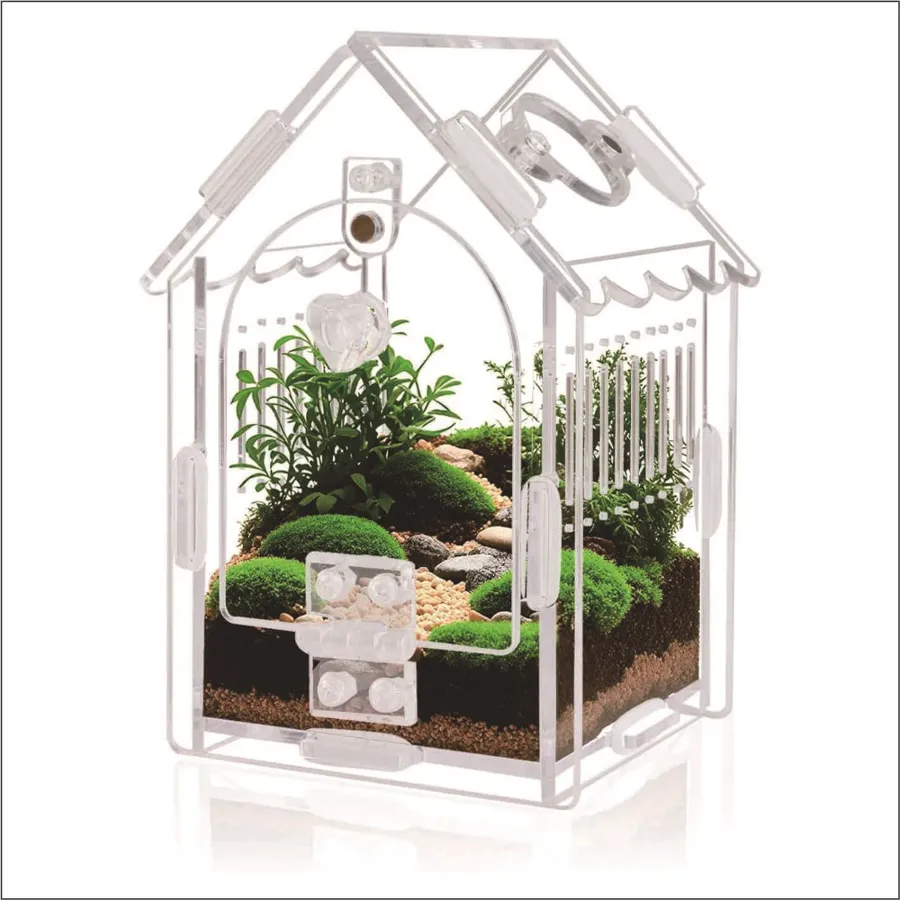
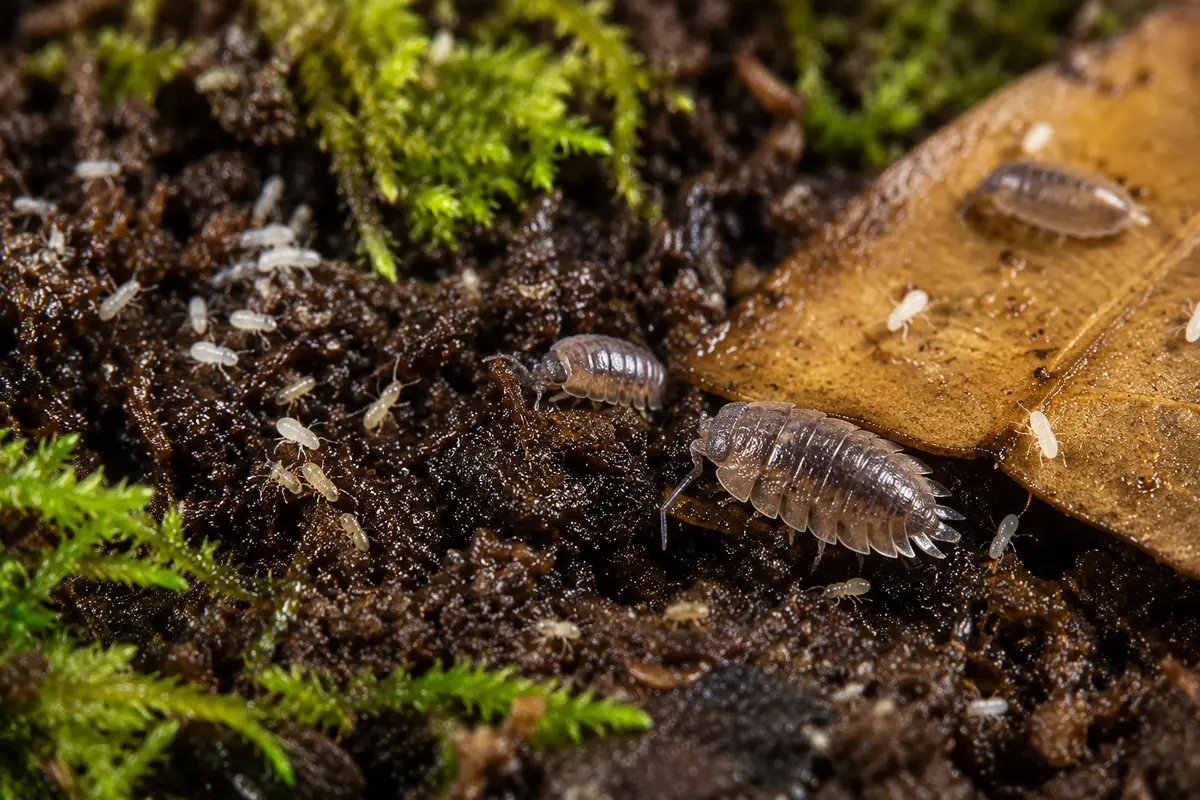
Bioactive means the enclosure runs a miniature ecosystem instead of relying only on you to remove waste. Tiny detritivores live in the substrate and eat mold, spider droppings, shed exoskeletons, and uneaten prey. Live plants take up some nutrients and help hold humidity. Done well, the enclosure reaches a rough balance where the cleanup crew keeps the floor from fouling between your normal checks.
The key word is rough. A bioactive enclosure is not self-cleaning in a magical sense. It is a system you seed, feed, and monitor until it stabilizes. When people are disappointed by bioactive, it is usually because they expected a hands-off miracle rather than a living setup that still needs attention.
The cleanup crew
Two invertebrates do most of the work, and you can keep it that simple.
| Cleanup crew | Job | Note |
|---|---|---|
| Springtails | Graze on mold and fine organic matter | Thrive in damp substrate, multiply fast, invisible to most tank guests |
| Isopods (dwarf species) | Break down droppings, old food and shed skins | Choose small, docile species; give them leaf litter to hide and feed in |
Springtails are the workhorses and the easiest place to start. They handle mold, which is the most common early problem in a damp enclosure, and they ask for almost nothing. Isopods add heavier-duty cleanup for droppings and prey remains. Between them they keep the substrate turning over, which is exactly the kind of stability that suits an animal you may keep for a very long time.
documented lifespan of females in some tarantula species, so a stable long-term substrate has real appeal
— Encyclopaedia Britannica, 2024
Substrate, drainage and plants
A bioactive build is layered. From the bottom up you generally want a drainage layer, a barrier, the living substrate, and a top of leaf litter, with plants set into it.
Drainage. A layer of light expanded clay or similar at the base gives excess water somewhere to collect instead of waterlogging the root zone and the cleanup crew. This is what keeps a humid bioactive enclosure from turning into a swamp.
Living substrate. The middle layer is where the crew and plant roots live. A coco fiber and pesticide-free topsoil base works well, kept lightly damp. For how to build that base correctly, see the substrate guide, which applies directly here.
Plants and leaf litter. Hardy, low-light plants and a layer of dried leaves give the isopods food and cover while making the enclosure look alive. Keep planting modest so your spider still has open ground or climbing space depending on its lifestyle.
All of this only works if air moves through the enclosure. A humid, planted, living substrate with no airflow is a recipe for mold, which is why cross-ventilation is non-negotiable for bioactive. The ventilation guide covers why perforated acrylic helps a damp setup breathe.
Terrestrial bioactive base
TaranTerra Acrylic Large Wide (25 x 15 x 15 cm)
A wide floor gives room for a drainage layer, living substrate and modest planting, with ventilation to keep a damp setup healthy.
$59.99 $79.99 Save $20.00
The honest limits
Here is the part the glossy photos skip. Bioactive is not indispensable, and it adds real complexity.
The trade-offs are worth naming plainly. A bioactive build takes longer to set up and costs more up front, between drainage media, a cleanup crew, plants, and leaf litter. It needs weeks to stabilize before it earns its keep, and during that window you are still watching for mold and imbalance. Some spiders, especially dry-habitat species, do not suit the humidity a planted setup encourages. And a burrowing tarantula will happily flatten your careful planting, because its needs come before your landscaping.
None of that means avoid bioactive. It means go in with open eyes.
From my own shelves
The bioactive enclosures I keep are genuinely lower-effort now, but only after the early weeks where I fussed over mold and a couple of failed plants. The honest comparison from my own shelves: bioactive saved me cleaning time in the long run, cost me more setup time and money up front, and was clearly the wrong fit for my dry-habitat spiders. For those I went back to simple substrate and never regretted it.
Is it worth it for you?
Use a simple rule. If you want a beautiful naturalistic display for a humidity-tolerant species and you enjoy the tinkering, bioactive is rewarding. If you are a new keeper who mainly wants a healthy spider with minimal fuss, start simple and add bioactive later once you are comfortable. Either path can house a happy tarantula.
Whichever you choose, the fundamentals do not change: the right size and shape for your spider, good airflow, and a secure lid. The how to choose a tarantula enclosure guide covers those criteria, the enclosure size by stage guide sizes it correctly, and arboreal vs terrestrial settles the shape. If you keep a tree-dweller like a pink toe tarantula, a lightly planted vertical setup can look superb. You can also read buyer feedback in our verified reviews or browse the full range on the enclosures home page. There are countless species to build around.
described tarantula species, with humidity needs ranging from rainforest to desert
— World Spider Catalog, 2024
Quick answers
Do tarantulas need a bioactive enclosure? No. It is optional. A simple substrate setup with spot-cleaning keeps a tarantula perfectly healthy.
Will the cleanup crew harm my tarantula? Springtails and small, docile isopods are not a threat to a healthy tarantula. Avoid large or aggressive isopod species.
Can I make a sling enclosure bioactive? You can seed springtails even in small setups to fight mold, but full planting is better suited to larger enclosures.

Adrian Costa · Tarantula keeper, 10+ yrs
Adrian has kept tarantulas for over a decade and has raised dozens of slings to adults. He builds and tests every enclosure on his own shelves before writing about it.
Free US shipping · 30-day money-back guarantee · Ships in 8–10 business days