
How we test tarantula enclosures
Every enclosure TaranTerra sells gets assembled, set up, and lived in by real tarantulas before it earns a page on this site. Our test bench is a rack in a home office, a spray bottle, and a rotation of spiders from slings to adults, terrestrial and arboreal. Here is exactly what we check, and where home testing stops.
Our criteria
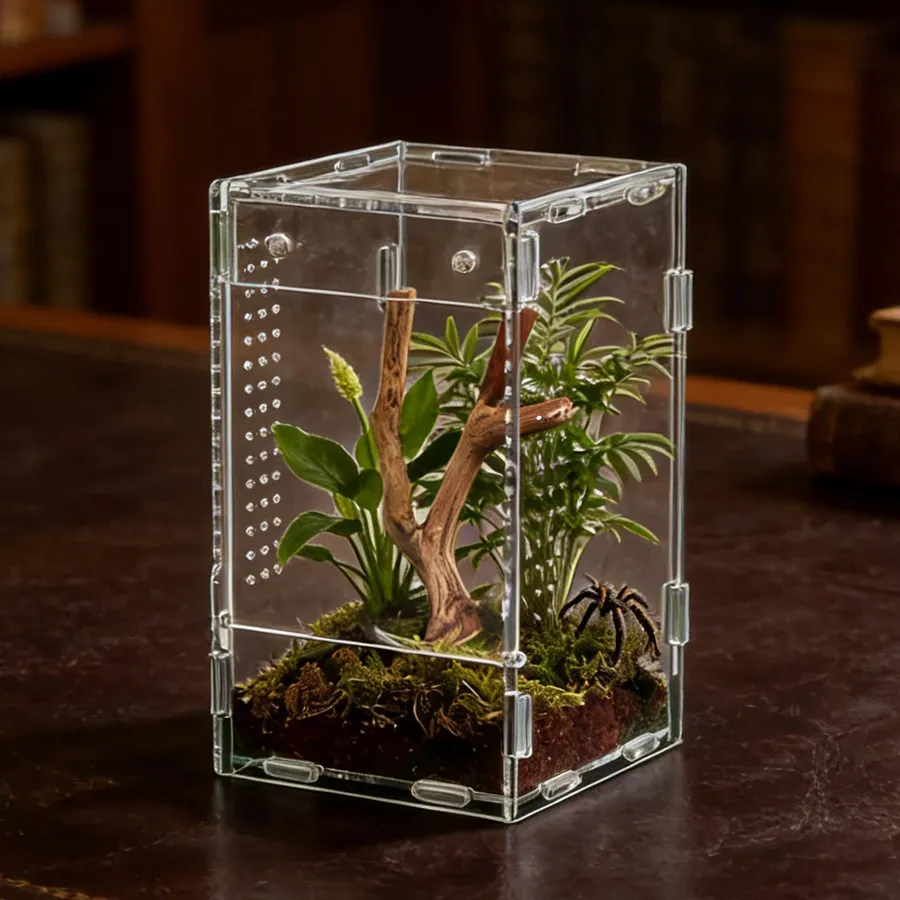
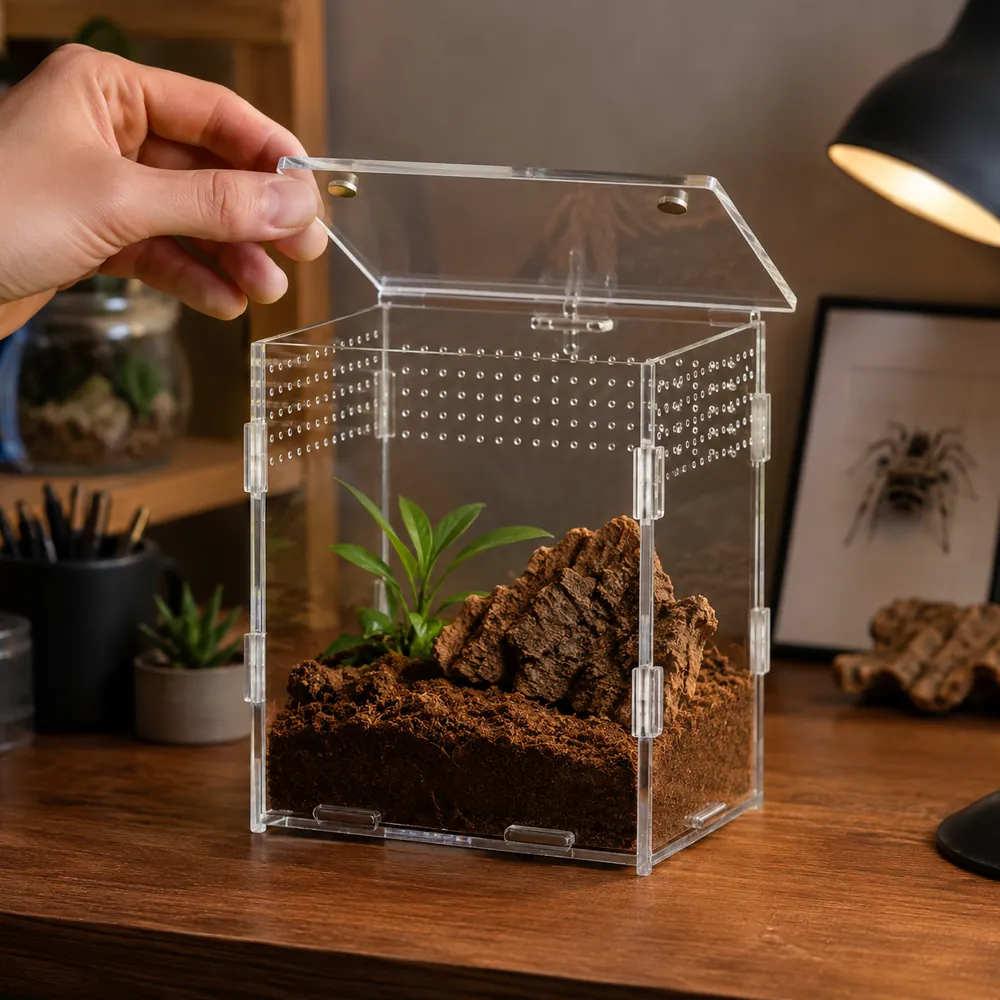
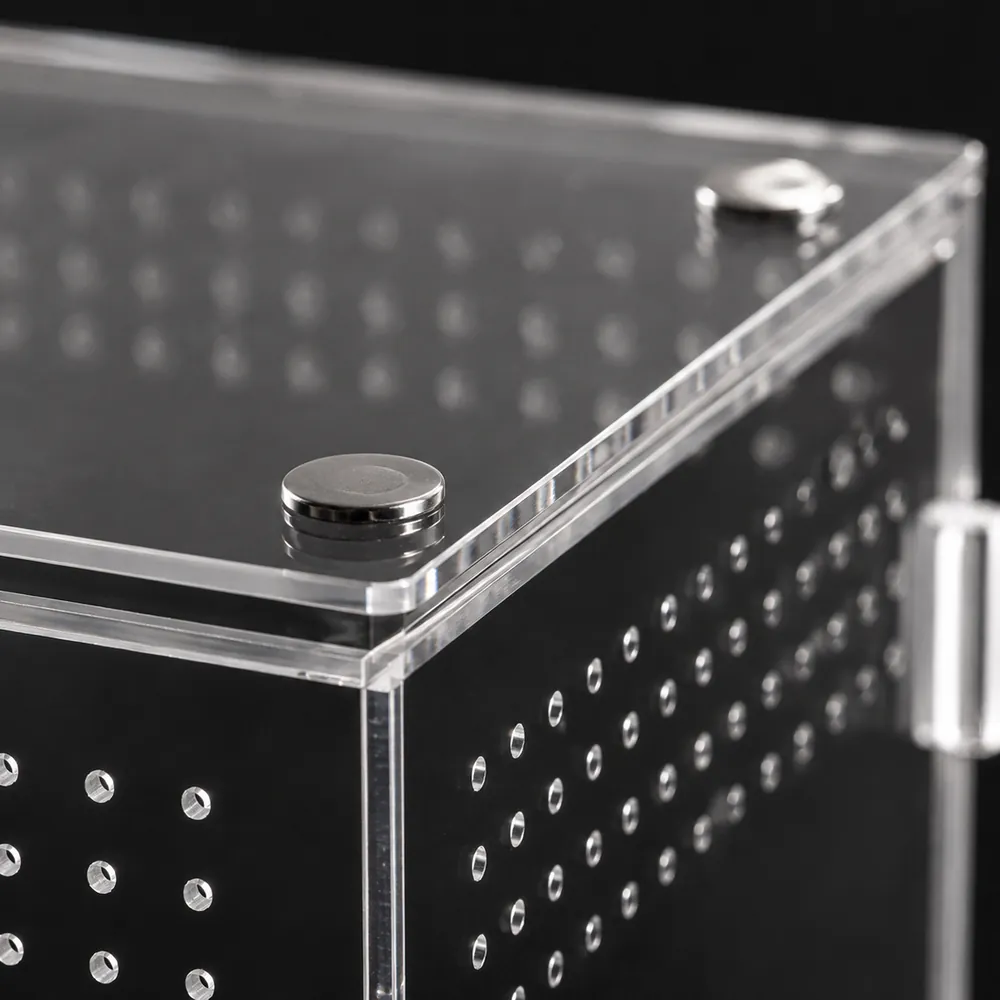
- Closures and doors. A latch you fight with at feeding time is a latch that eventually gets left ajar. We open and close the magnetic lids on the acrylic range and the hinged flip door on the TaranTerra House through weeks of feedings, waterings, and maintenance, checking that panels sit flush, that closures line up after repeated use, and that a lid stays put when a determined spider climbs the walls at night. Anything that loosens or misaligns over time gets written up.
- Ventilation. Airflow is where many acrylic enclosures quietly fail. We run each unit with damp substrate and watch for condensation on the walls, stale pockets of air, and how quickly things dry out after misting. The Large Tall gets particular attention here, because arboreal species depend on cross ventilation, and we compare what we see at home against the principles in our ventilation guide.
- Clarity. The point of an acrylic enclosure is seeing your spider, so we judge each unit as a display piece. We check the acrylic for distortion and haze after the protective film comes off, note how it handles routine cleaning without picking up scratches, and confirm you can still get a clear look at a molt or a feeding response through the walls after weeks of use.
- Assembly. Every unit ships flat, so we build each one exactly as a buyer would: peel the protective film, fit the panels, seat the closures. We time it, note any step where the instructions fall short, and check that edges meet cleanly with no gaps a sling could exploit. Buyer reviews consistently call the assembly easy, and we test each batch against that expectation rather than assuming it.
- Honest limits. Specs on this site come from the manufacturer's own listing, checked against what we see at home. When a number is unverified, it stays off the page, which is why you will find plain descriptions here instead of invented measurements.
Where home testing stops
Our testing happens on a keeper's rack, not in a laboratory. Material composition analysis, standardized impact testing, and long-run durability cycles are beyond what a small brand can operate, so we stay in our lane: real enclosures, real tarantulas at every stage from sling to adult, and plain reporting on what we observe. What home testing does give us is the thing a lab cannot: months of watching a terrestrial adult dig into deep substrate in the Large Wide, and an arboreal anchor its web to the height of the Large Tall. Every claim on this site traces back either to the manufacturer's listing or to something that happened on that rack, and every order is backed by a 30-day money-back guarantee, so the risk of trying one sits with us, not you. For the buyer's side of the story, our reviews page collects verified reviews of the acrylic range.