
Tarantula Sling Enclosure — The TaranTerra House
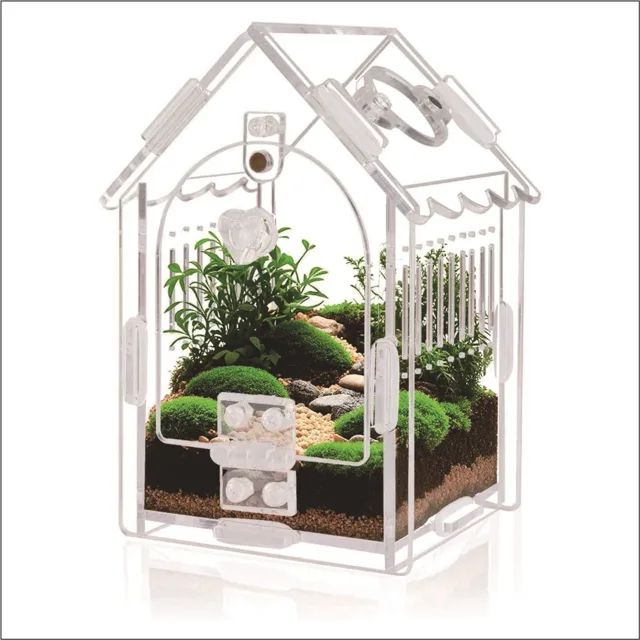
House Small · Single hinge
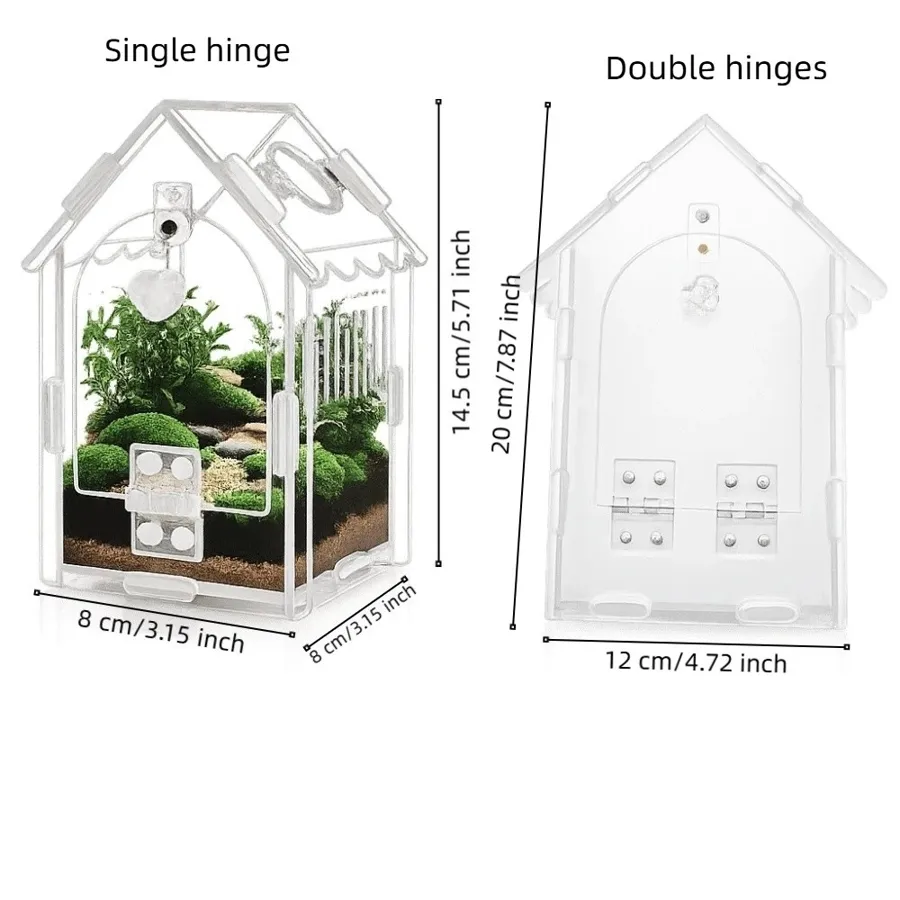
8×8 cm floor, 14.5 cm body (20 cm with roof)
You save $15.00
🔥 Selling fast — limited stock
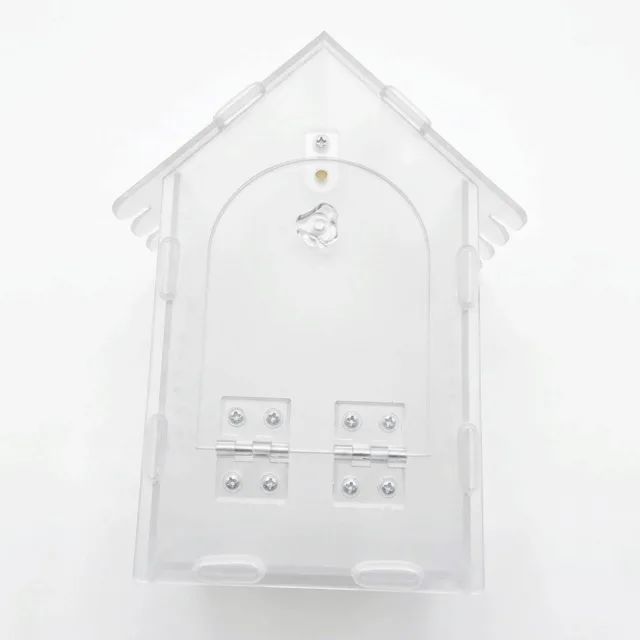
House Large · Double hinges
12 cm wide, taller body
You save $20.00
🔥 Selling fast — limited stock
✓ Free US shipping ✓ Dispatched in 1-2 business days ✓ 30-day money-back guarantee 🔒 Secure checkout
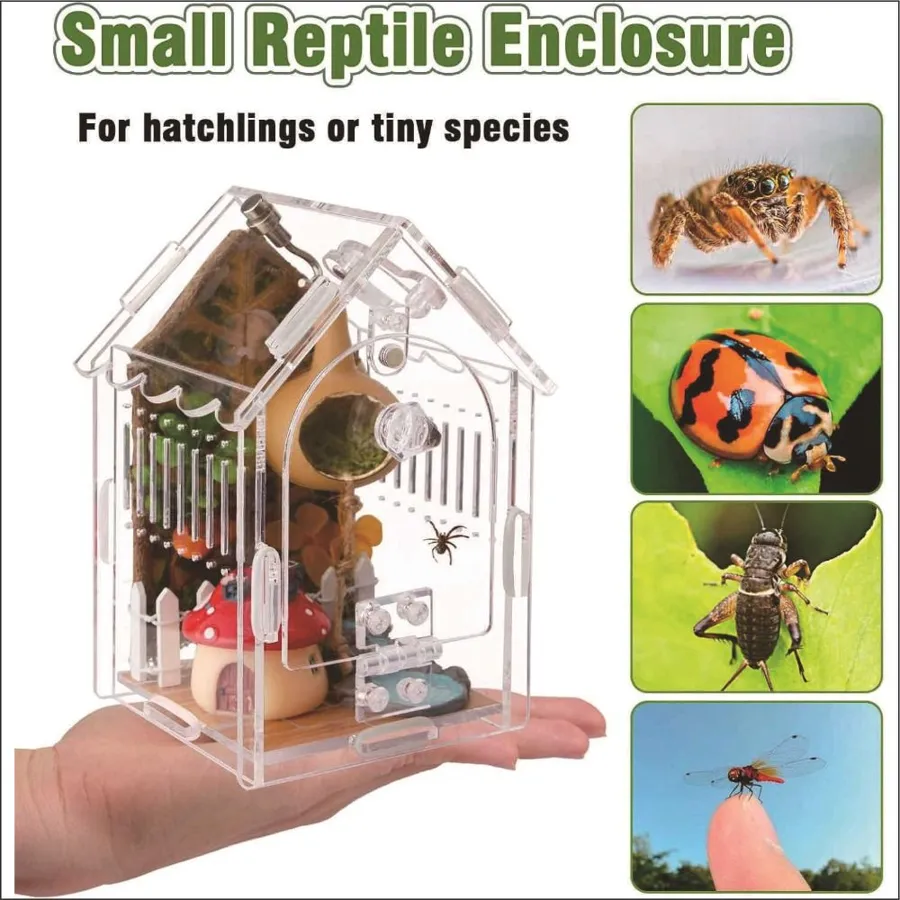
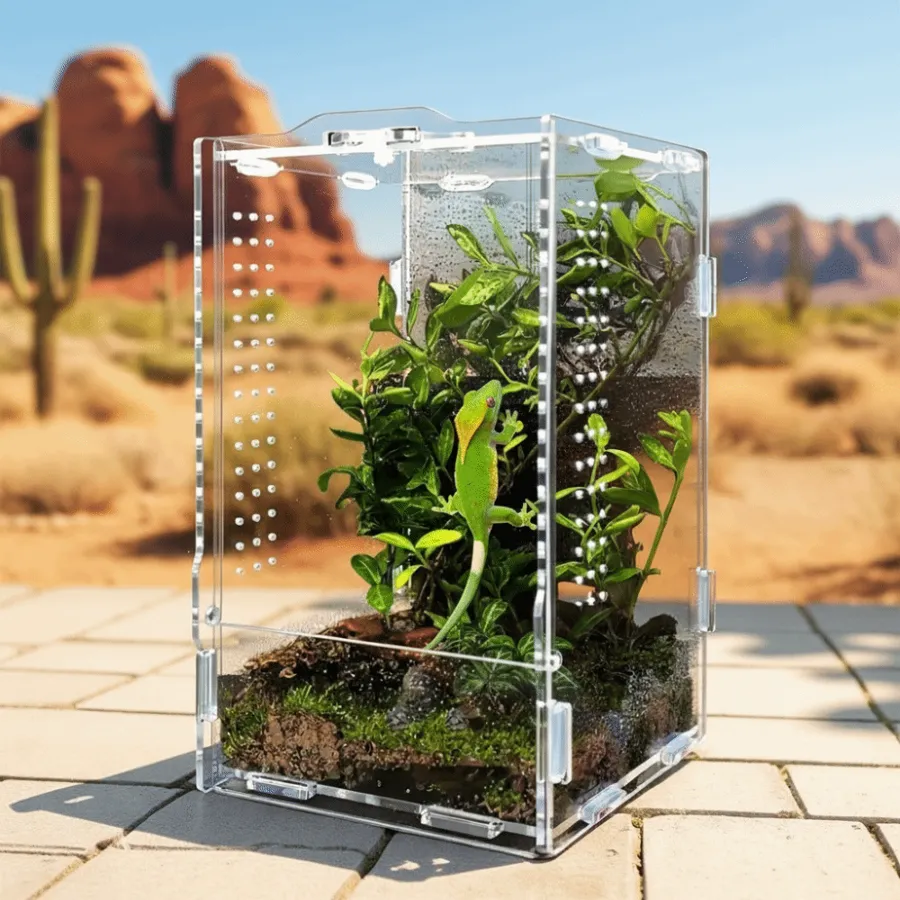
A sling and display enclosure — for hatchlings or tiny species
We would rather tell you where the House fits than oversell it. The supplier describes it as an enclosure for hatchlings or tiny species, and that is exactly how we position it. It is ideal for a spiderling you have just acquired, for isolating a small spider during quarantine, or as a tidy display piece on a shelf. What it is not is a forever home for a full-grown tarantula — an adult needs the floor of a terrestrial Large Wide or the height of an arboreal Large Tall. Being clear about that is the difference between a keeper who trusts us and one who does not.
The little house shape is not just cute. The pitched acrylic roof and the decorative clip make it a genuine display enclosure you can keep in the open, while the flip door and ventilation rows keep it fully functional. Our how to choose a tarantula enclosure guide and the size-by-stage guide both start slings in exactly this kind of small, secure box.
Why a sling belongs in a small enclosure
It helps a sling find its prey. Spiderlings are small and their eyesight is poor; they hunt by touch and vibration. Drop a pinhead cricket into a large enclosure and a sling may never encounter it, then go into a fast it did not need. In the House, prey stays close, so the sling eats reliably and grows on schedule.
It makes molts safer. A molting sling is fragile and needs to feel secure. A small, enclosed space with a hide and the right humidity encourages a sling to settle and molt without stress. Get the ground layer right with our substrate guide, and keep airflow steady using the House's ventilation rows — our ventilation guide covers the balance for small enclosures.
It supports a progressive upgrade. The right approach is to rehouse in steps as the spider grows, not to buy one giant enclosure on day one. A sling starts in the House, moves to an acrylic Small then Medium as a juvenile, and finishes in a Large sized to its lifestyle. If you want live cleanup even at the sling stage, a light planted setup is possible — see our bioactive enclosure guide.
Slings are best housed in small enclosures so they can locate prey and feel secure, then rehoused in stages as they grow
— The Tarantula Keeper's Guide, Schultz & Schultz (Barron's), 2009
What makes the House work
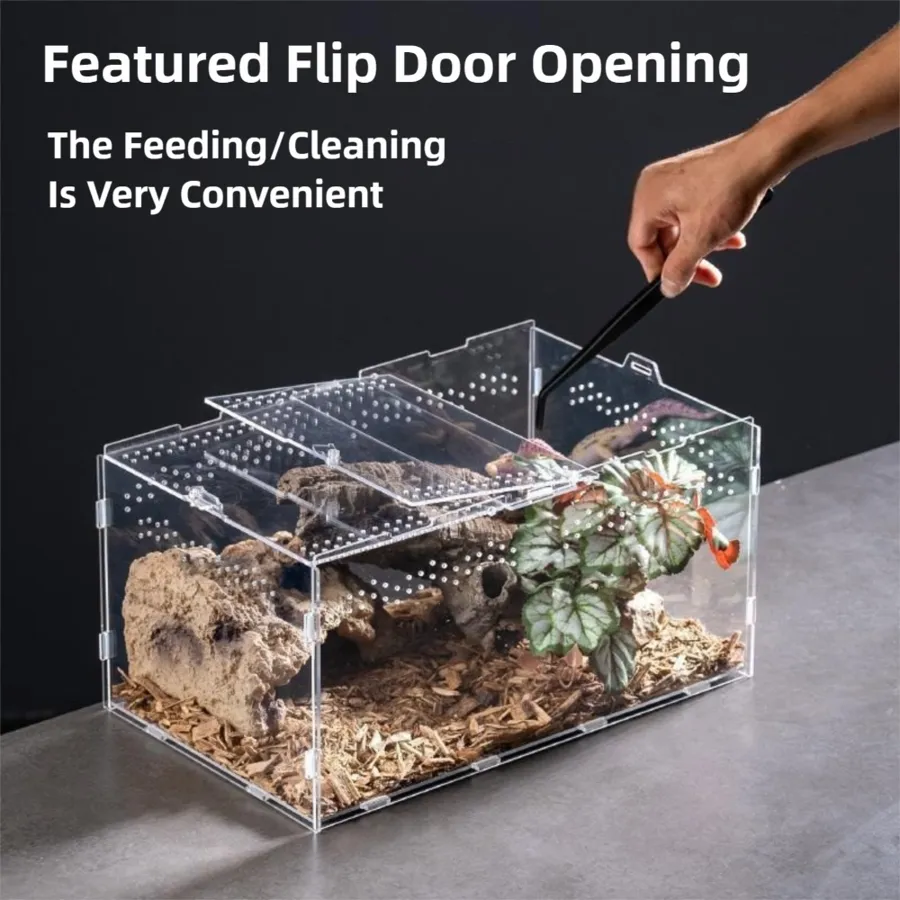
Front flip door
Feed and spot-clean through the hinged front panel without lifting the roof, so a nervous sling stays undisturbed.
The Small has a single hinge and the Large has double hinges for a wider opening. Either way you reach in from the front, which is far less stressful for a spiderling than opening the whole top.
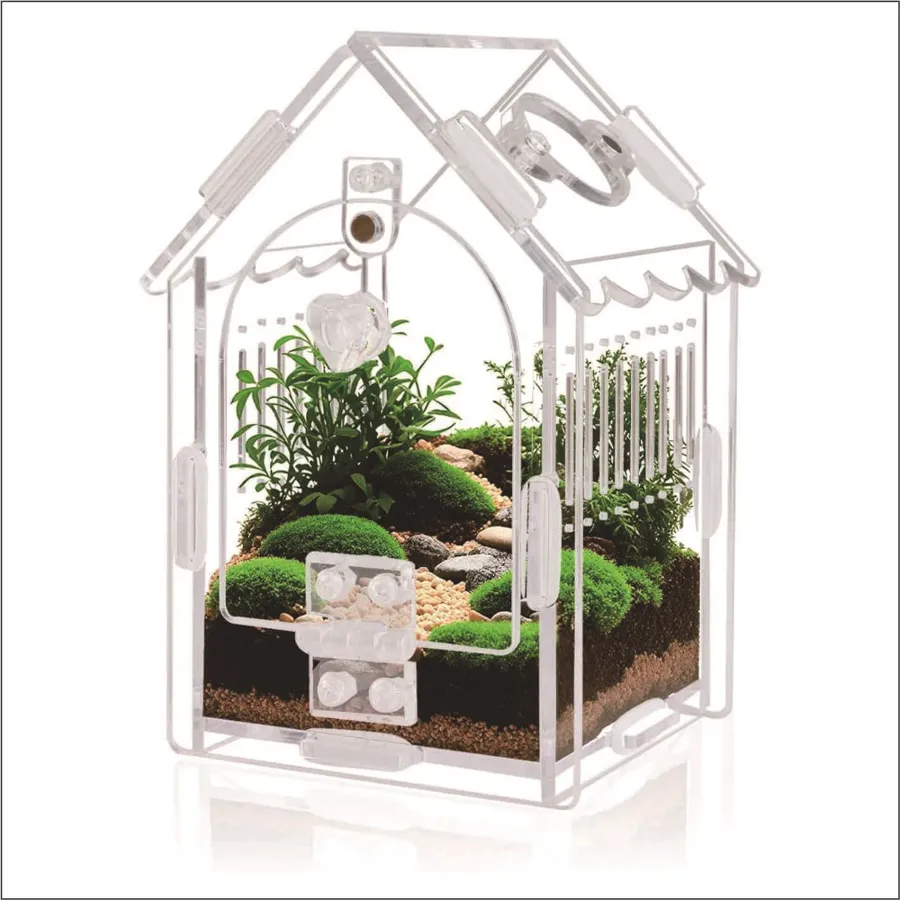
Display-ready
The house shape, clear acrylic, and decorative clip make it a display enclosure you can keep out in the open.
A pinch of substrate, a small hide, and a sprig of plant turn the House into a tidy shelf piece. You watch the sling through crystal-clear walls without ever opening it.
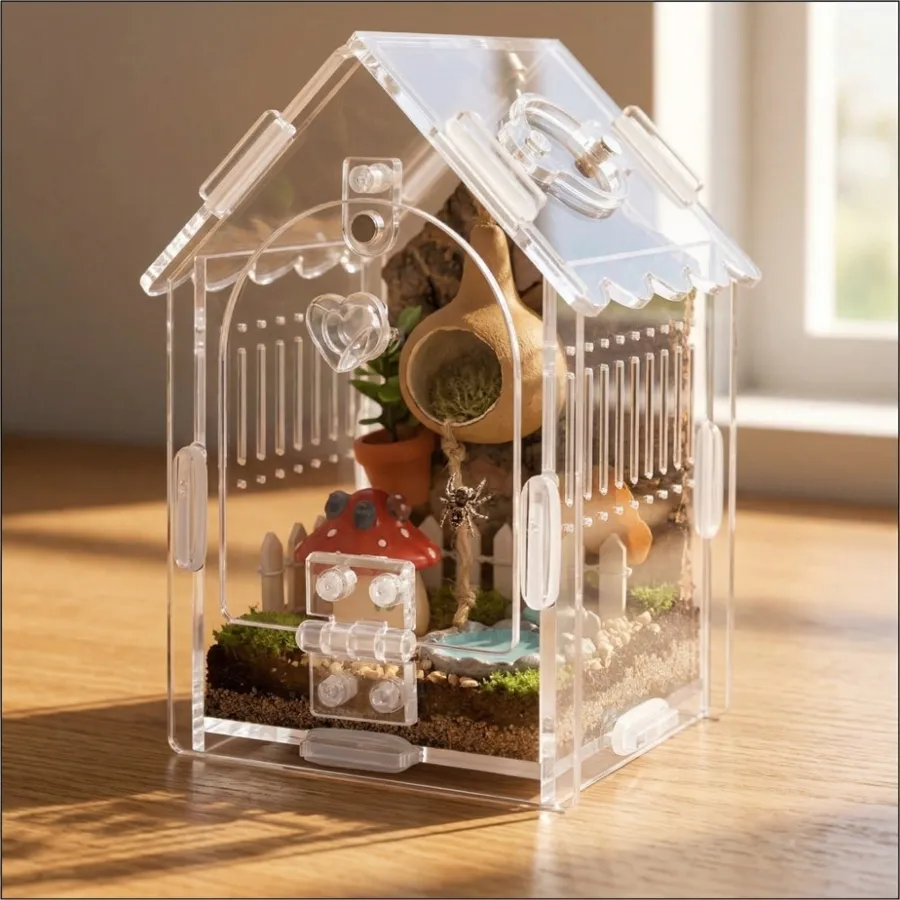
Clear & ventilated
See-through acrylic on every panel with rows of ventilation holes to keep air moving around a small spider.
It ships flat, clicks together in minutes with no tools or glue, and comes apart just as easily when it is time to deep-clean between occupants.
Reviews for the acrylic range
You can read every verified acrylic-range review — with unedited buyer photos — on our reviews page. Buyers there consistently mention crystal-clear panels, easy flat assembly, and genuine see-through walls, all features the House shares.
When your sling grows, move it up
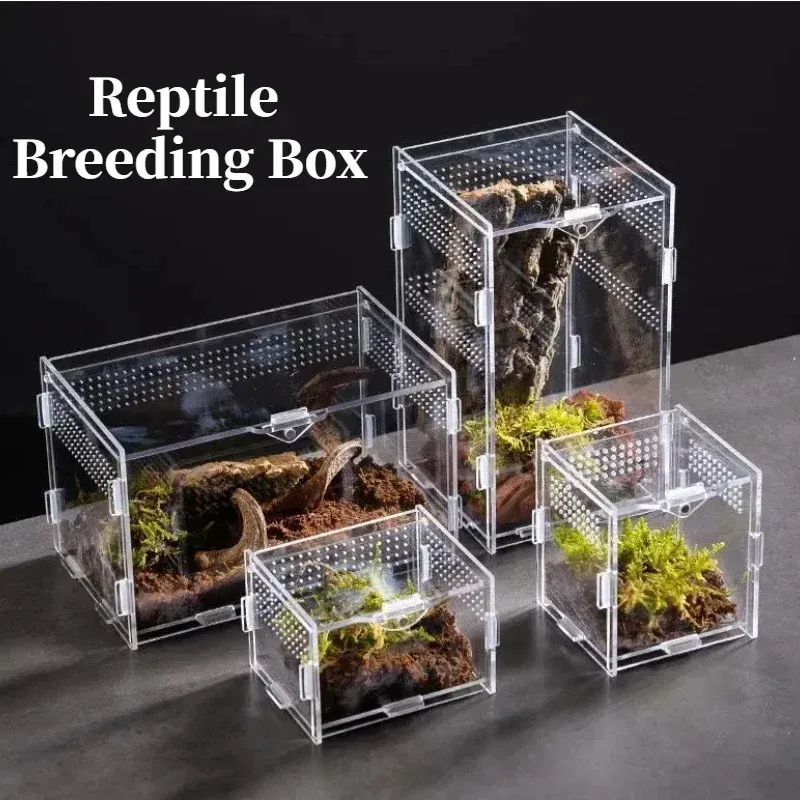
Acrylic Small — juvenile step
Once a sling outgrows the House, the acrylic Small 10×10×10 cm is the next home before a Medium. $29.99 (was $39.99).
Acrylic Medium — juveniles
The Medium 12×12×20 cm is the right step for juveniles that have grown past the Small. $44.99 (was $59.99).
Not sure which lifestyle your species has? Read arboreal vs terrestrial tarantulas before the adult upgrade.
"Every one of the dozens of slings I've raised started in a small box like this. Keep prey close and the spiderling secure, and rehouse in steps — that is how you bring a sling all the way to an adult."— Adrian Costa, TaranTerra keeper, 10+ years raising slings to adults
Reviewed and updated July 2026. See how we test.
Sling enclosure questions
Is the TaranTerra House suitable for an adult tarantula?
No. The House is a sling and display enclosure for hatchlings or tiny species. It is the right size for a spiderling to find its prey and molt safely, but a growing tarantula should move up to an acrylic Small, then Medium, and finally an adult Large as it matures.
Why keep a tiny sling in a small enclosure instead of a big one?
A sling in a large enclosure struggles to find its food and can go hungry among too much space. A small House keeps prey within reach, makes the spiderling feel secure, and lets you spot problems quickly. Right-sizing to the animal is standard practice for raising slings.
How does the flip door work for feeding and cleaning?
The House has a front flip door on hinges, so you open the panel to drop in prey or spot-clean without lifting the whole roof. That means less disturbance for a nervous sling. The Small has a single hinge and the Large has double hinges for a wider opening.
How fast does it ship and is it easy to set up?
It ships flat and clicks together in minutes with no tools. We dispatch in 1-2 business days and delivery to the United States takes 8-10 business days with free shipping. Every order is covered by a 30-day money-back guarantee if it is not right for you.
Start your sling in the right home
The TaranTerra House — from $39.99, was $54.99. Free US shipping and a 30-day money-back guarantee.
Explore the full TaranTerra range or read the acrylic range reviews.